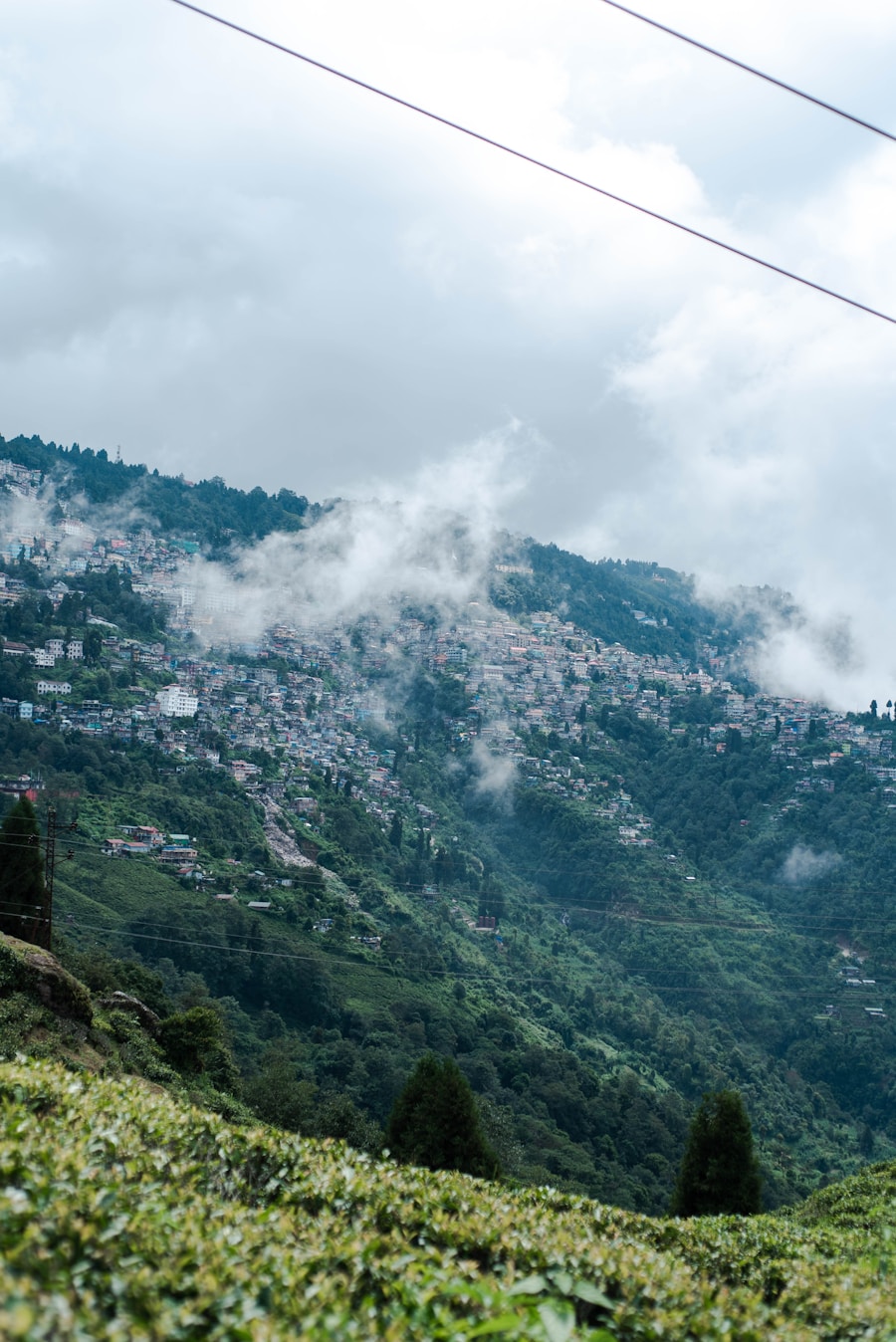
Assam and Darjeeling together produce the majority of India’s export-quality tea. They sit roughly 600 kilometres apart. They produce leaves that taste nothing like each other, brew differently, and suit entirely different purposes. The comparison is useful not because one is better, but because they answer different questions.
The geography argument
Assam runs through a wide flat river valley — the Brahmaputra basin — at an elevation of around 50–100 metres above sea level. The climate is hot and humid, with monsoon rainfall that can exceed 2,500mm per year. These conditions are ideal for rapid, aggressive leaf growth. The Assam plant variant (Camellia sinensis var. assamica) evolved here and has large, dark leaves adapted for maximum photosynthesis.
Darjeeling sits in the Himalayan foothills, with estates between 600 and 2,000 metres. The cooler temperatures, thinner air, and dramatic diurnal temperature shifts slow leaf growth considerably. Slow growth concentrates compounds. The Chinese hybrid cultivar (Camellia sinensis var. sinensis) dominates in the higher elevations, producing smaller, more aromatic leaves.
What the difference means in the cup
Assam produces a thick, brisk, malty liquor. The high tannin content means it holds its character through milk and sugar — which is precisely why it became the base of the Indian masala chai tradition. Add milk, boil, add spice: the Assam leaf pushes through all of it and remains present.
Darjeeling is more fragile. A Darjeeling second flush at its best has a muscatel note — a complex floral-fruity character that disappears the moment you boil it with milk and spices. The liquor is lighter in colour, more golden-amber than the deep copper of Assam. Its aromatics are delicate and upper-register.
The flush factor
Both origins produce multiple harvests, called flushes. Darjeeling has four recognised flushes; its second flush (June–mid-July) is the most prized for the muscatel note. Assam’s prime harvest is typically the second flush as well, but the character difference between Assam flushes is less dramatic than in Darjeeling — the climate is more consistent, so the leaf quality varies less by season.
Why Aburaj sources from both
Our Devnagari and Premium lines are Assam-dominant blends, calibrated for the kadak cup — body through milk, consistent across a long daily brew. Our Darjeeling Gold lines are single-origin or Darjeeling-dominant, intended for drinking without milk or with minimal milk, where the muscatel character can actually reach the palate.
Sourcing both requires different relationships. Our Assam growers are in the Tezpur–Dibrugarh corridor, known for the malt and body the grade demands. Our Darjeeling grower is a single estate in the Sungma valley, selected specifically for the intensity of the second-flush muscatel.
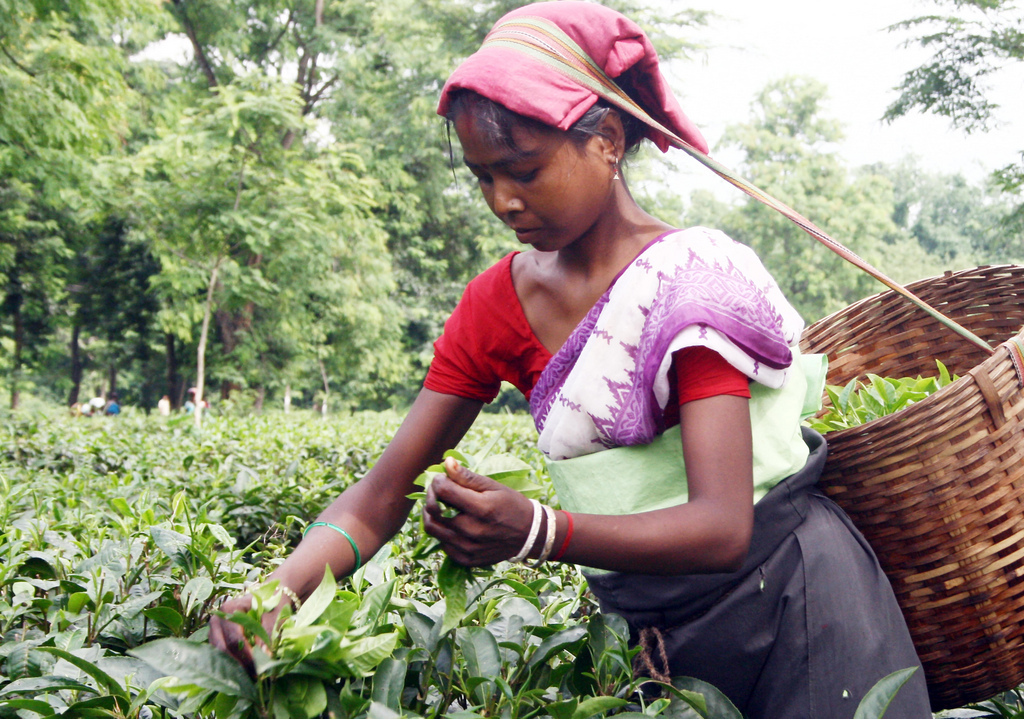
Picker at Amluckee Tea Estate, Nagaon, Assam. Photo: Diganta Talukdar, CC BY 2.0 via Wikimedia Commons.
Which one to buy
If you brew with milk and drink two or more cups a day: Assam-based. If you drink one careful cup in the morning without milk or with minimal cold milk poured in after: Darjeeling. If you are unsure, try the Darjeeling Gold Leaf alongside the Premium Leaf on the same morning and the decision will make itself.